Building a custom motorbike – coffee racers and scramblers

Custom bike Honda – cafe racer, bobber, scrambler and chopper

Custom motorbike from Honda – the Honda GB350 and Honda CL500 as a base for cafe racer and coffee racer builds

The most popular Honda custom bikes

Honda stands not only for sporty naked bikes, but also for motorcycles with strong character, classic design and a relaxed riding feel - the Honda custom bike and custom motorcycle range. In the custom and cruiser motorcycle segment, Honda combines authentic style with modern technology and reliable everyday usability. From the purist retro machine to the powerful cruiser with state-of-the-art electronics, Honda offers custom bike motorcycles that stand out through personality, comfort and riding enjoyment. The custom styles range from the bobber motorcycle through the scrambler motorcycle to the cafe racer and chopper motorcycle.

Customising and individualising a custom bike

A factory custom bike is only the beginning for many riders: handlebar, seat, exhaust system, lighting or footpegs can all be adapted without character or everyday usability suffering.

We carry out conversions and customising in our own workshop in Volketswil – with an eye on type approval and warranty. You can find out what is possible and what it costs under Motorcycle workshop, conversion and service.

Motorrad Zürich AG offers a large selection of Honda custom bike and cruiser models. Whether classic retro roadster, modern scrambler or powerful cruiser – with us you will find the right Honda custom motorcycle for your personal riding style. Our team will gladly advise you and accompany you on the way to your new dream custom bike.

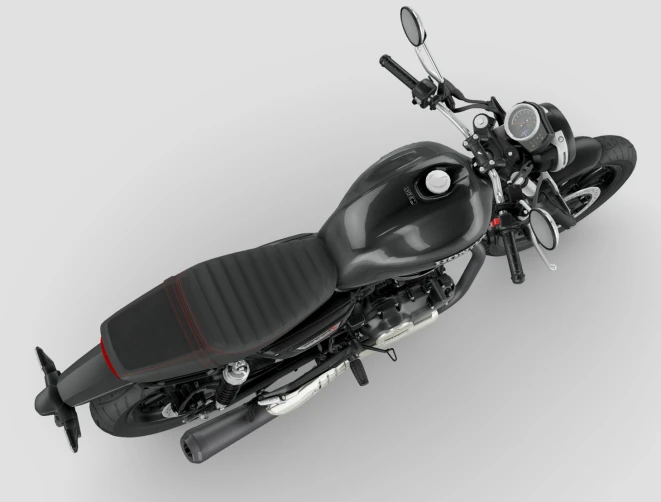
  • Honda GB350 retro custom bike – cafe racer conversion base with 348 cc single cylinder at the Honda Dream Dealer Zurich
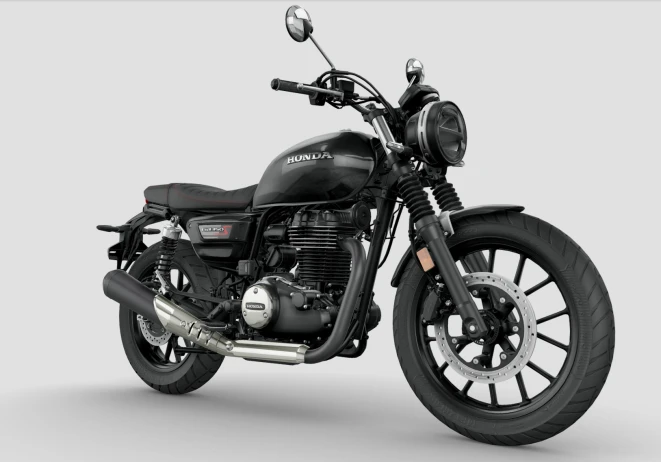
  • Honda GB350S side view – classic retro motorcycle by Honda as a coffee racer base in Volketswil

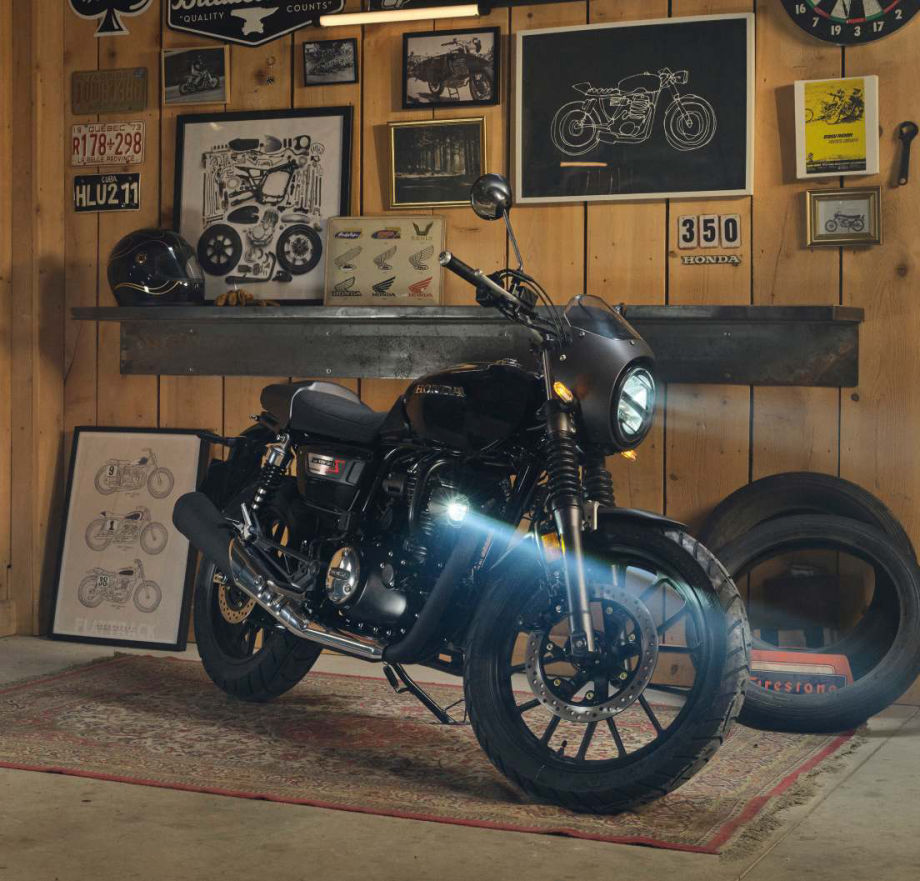
Honda GB350 – retro custom bike & cafe racer base

The Honda GB350 custom motorcycle embodies classic motorcycle engineering in its purest form. With its timeless retro design, air-cooled single-cylinder engine and relaxed seating position, it recalls the traditional roadsters of past decades – combined with modern Honda technology.

The 348 cc single cylinder delivers around 15 kW and impresses above all with its pleasant torque and a particularly smooth, refined running character. The low seat height and good-natured handling make the GB350 a very accessible motorcycle that appeals to beginners and lovers of classic custom bikes alike.

The GB350 is aimed at custom bike riders looking for a purist motorcycle with authentic character. Its minimalist design, classic engine and relaxed ergonomics turn every ride into a stylish experience. Its slim silhouette also makes it a popular basis for a cafe racer conversion.

Retro motorcycle from Honda – GB350 and CL500 as a retro bike

A retro motorcycle lives on clean lines: a round headlight, a visible frame, a classic tank. Honda covers this style with two models. The GB350 is the calm retro bike with a single-cylinder engine and an upright riding position; the CL500 takes the retro look in a scrambler direction.

If you are looking for a retro motorcycle as a conversion base, both work well: parts are available, the technology is straightforward, and the character of the machine already carries the build. Whether as a retro bike straight from the factory or as the starting point for a cafe racer – the machines currently available are listed further down this page (prices are non-binding and subject to change).

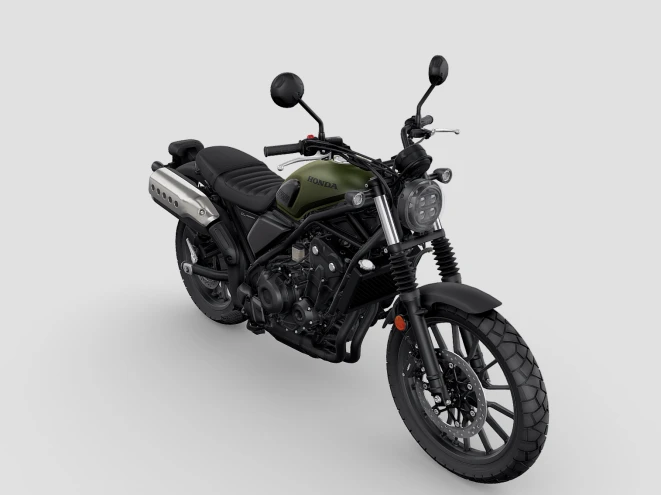
  • Honda CL500 scrambler motorcycle – the best cafe racer conversion base in its class at the Honda Dream Dealer Zurich
  • Honda CL500 with high-mounted exhaust – scrambler and coffee racer conversion in our own workshop in Volketswil

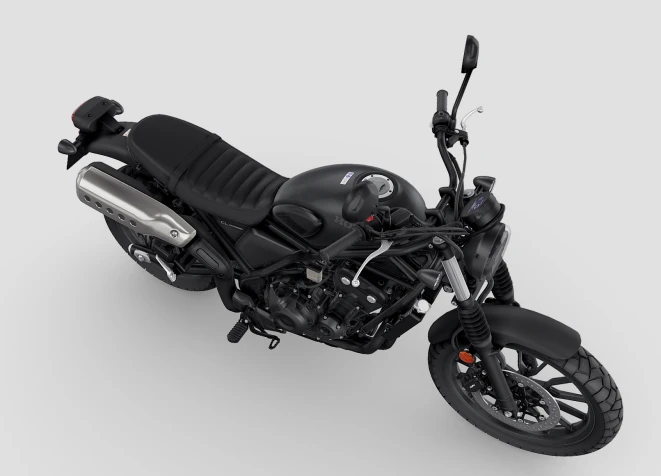
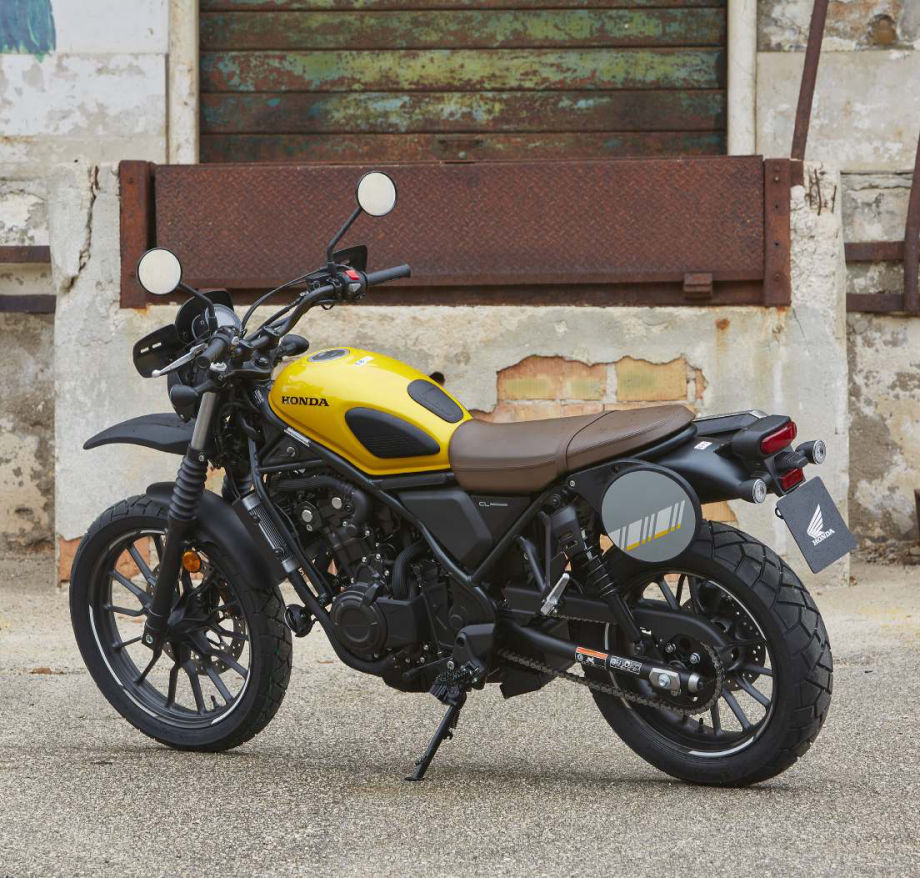
Honda CL500 – scrambler motorcycle & coffee racer conversion base

The CL500 combines the spirit of classic scramblers with modern technology and versatile uses as a custom motorcycle. Its distinctive look with a high-mounted exhaust, rugged design and upright seating position gives it an unmistakable custom bike presence.

The proven 471 cc parallel twin delivers 34 kW and provides a pleasant balance of power and control. This makes the CL500 ideal for relaxed tours, city traffic or spontaneous trips on smaller side roads and gravel tracks.

The CL500 is particularly attractive for riders looking for an individual motorcycle with lifestyle character. It combines scrambler looks, modern technology and everyday usability in a stylish overall custom bike package.

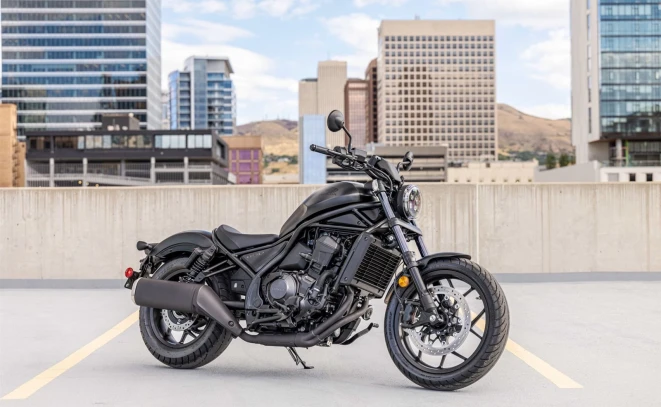
  • Honda Rebel 500 bobber motorcycle – Honda CMX500 Rebel, A2 compliant with low seat height, custom bike Zurich
  • Honda Rebel 500 side view – Honda CMX500 Rebel bobber design at the Honda Dream Dealer Volketswil

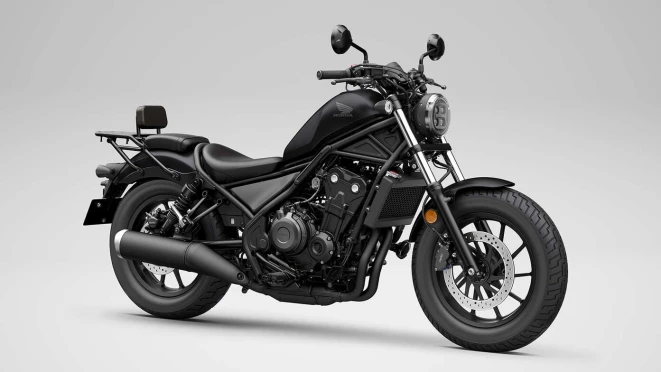
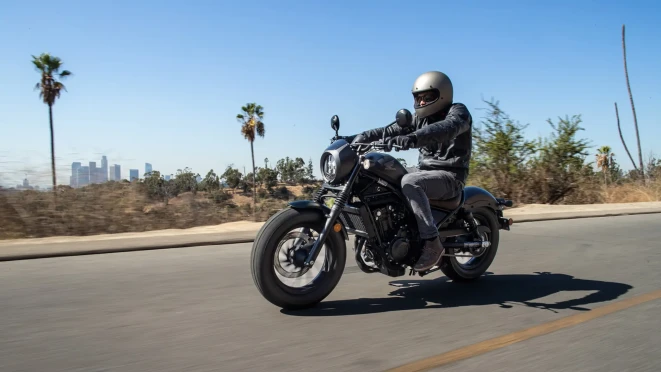
Bobber motorbike from Honda – the minimalist custom bike base

The bobber is the most pared-back custom bike style: short mudguards, a low centre of gravity, a minimalist line. At Honda that role is filled by the Honda Rebel 500 – listed as the CMX500 Rebel in the vehicle documents, with 471 cc, a low seat and a relaxed riding position.

A bobber is a rewarding base to build on: handlebar, seat and exhaust set the character without spoiling everyday usability.

Models, versions, accessories and availability are on our page for the Honda Rebel 500 and Rebel 1100.

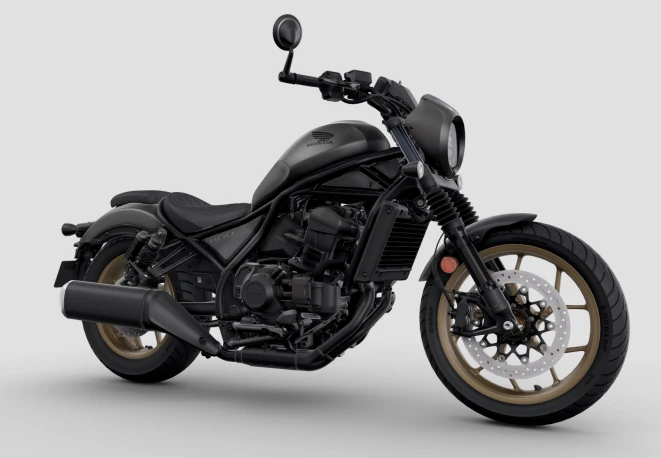
  • Honda Rebel 1100 cruiser custom bike – CMX1100 Rebel with 1084 cc twin and DCT at the Honda Dream Dealer
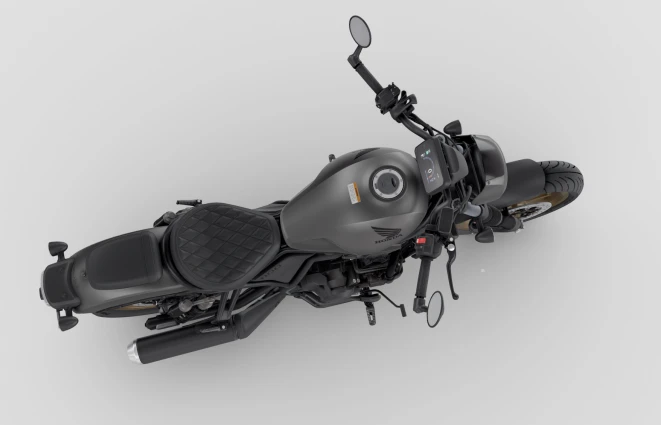
  • Honda Rebel 1100 side view – CMX1100 Rebel cruiser motorcycle by Honda in Volketswil Zurich

Custom bike for long distances from Honda

The cruiser stands for relaxed riding with a low centre of gravity and a long wheelbase. In Honda’s custom bike range that job goes to the Honda Rebel 1100 with the 1,084 cc twin from the Africa Twin, optionally with a dual clutch transmission.

Customising a cruiser usually runs through the handlebar, seat, exhaust and footpegs – we carry that out in our own workshop in Volketswil ZH.

The individual versions – manual, DCT, Touring and Special Edition – are described on our page for the Honda Rebel.

  • Honda Rebel 1100 Special Edition – CMX1100 custom motorcycle with exclusive paintwork at the Honda Dream Dealer Zurich
  • Honda Rebel 1100 Special Edition detail – premium custom bike by Honda in Volketswil

Custom bike with special equipment

Alongside the standard versions there are custom cruisers with exclusive design and equipment details: their own paint schemes, higher-grade design elements and extra equipment – technically on the familiar base, visually far more distinctive.

For many riders that is the shortest route to an individual look: from the factory, road legal and without any conversion work.

Which Special Edition is available right now is shown on our page for the Honda Rebel.

Bobber, chopper, scrambler & cafe racer – the custom bike styles from Honda

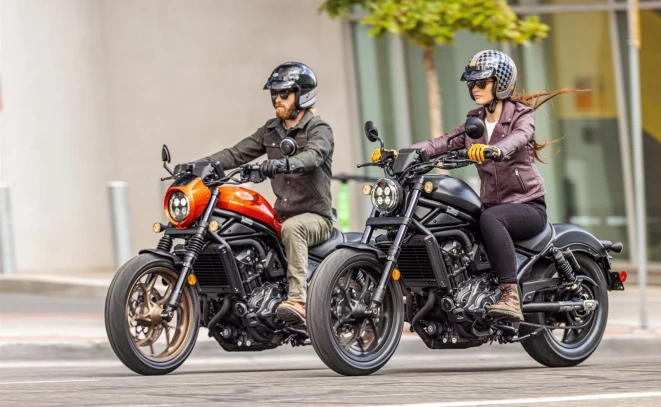
Custom bike is the umbrella term – several style directions sit beneath it. Which one suits you decides the choice of model. With the Honda Rebel 500, the Honda Rebel 1100, the Honda GB350 and the Honda CL500, Honda covers four of these styles.

Bobber – the most pared-back custom bike style

A bobber is a custom bike from which everything superfluous has been left out: short mudguards, a low centre of gravity, a minimalist line. The bobber motorcycle from Honda is the Honda Rebel 500. As the Honda CMX500 Rebel it is approved for category A restricted, the Honda CMX500 weighs little and has a very low seat height – the classic way into the bobber segment.

Cruiser – the custom bike for long distances

The cruiser stands for relaxed riding with a low centre of gravity and a long wheelbase. The cruiser motorcycle in the Honda custom bike range is the Honda Rebel 1100. The CMX1100 Rebel uses the 1084 cc twin from the Africa Twin and is available with DCT automatic transmission – a custom motorcycle for long distances.

Scrambler – Honda CL500

You recognise the scrambler motorcycle by its high-mounted exhaust, upright seating position and rugged appearance. The scrambler from Honda is the Honda CL500. It handles the road just as confidently as gravel – and it is at the same time the best conversion base in its class for a cafe racer or coffee racer.

Cafe racer and coffee racer – Honda CL500 and Honda GB350

The cafe racer – often also written coffee racer – is the sportiest custom bike style: clip-on handlebars, a stretched riding position, a short rear end. With the Honda CL500 and the Honda GB350, Honda supplies two ideal base motorcycles for a cafe racer conversion. Both have the visible steel tube frame and the classic basic geometry that a credible coffee racer needs.

Chopper – the related style

The chopper motorcycle is the closest relative of the bobber motorcycle: a long fork angle, a stretched silhouette, strong individualisation. Honda does not offer a factory chopper motorcycle – anyone who wants to take a custom bike towards chopper looks works through the handlebar, the seat and the chassis. The Honda Rebel 500 as the Honda CMX500 Rebel and the Honda Rebel 1100 are the obvious starting points for a chopper motorcycle thanks to their minimalist line.

Which style suits your riding profile is something we clarify in conversation – together with the question of what should be converted on the chosen custom motorcycle and which of it requires registration.

From scrambler to coffee racer – why the Honda CL500 is the best conversion base in its class

The starting point: what the CL500 brings with it

Honda launched the CL500 in 2023 as a modern scrambler, inspired by the CL models of the sixties and seventies. What sounds on paper like a pure retro quotation is technically one of the most interesting conversion bases currently available in the category A restricted segment.

The reason lies in the construction. The CL500 uses a newly developed diamond-type steel tube frame, together with the proven 471 cm³ inline twin from the CB500 family with 35 kW and full approval for category A restricted. At the front a conventional 41 mm telescopic fork with 150 mm of travel does the work, at the rear a steel swingarm with twin shocks. The wheels measure 19 inches at the front and 17 inches at the rear, the seat height is 790 mm and the kerb weight around 192 kg.

For a conversion, however, three other points are decisive:

Visible steel tube frame. The CL500 does not hide its structure behind bodywork. Frame, swingarm, engine and shocks are part of the design. That is exactly the basic requirement for a credible cafe racer conversion – on a fully faired motorcycle the design has to be exposed first, here it is already open.

Classic basic geometry. Round headlight, rounded tank with knee pads, straight seat line, twin-sided swingarm with stereo shocks. These are exactly the elements a cafe racer consists of. Nothing has to be invented – it only has to be sharpened.

Shared platform. The CL500 shares its engine and basic chassis with the CB500F, CBR500R, NX500 and the CMX500 Rebel. That means a very wide range of parts, experience and accessories that can be adapted – and an engine that has been in series production for over a decade and whose durability is beyond question.

There is one more point that should not be underestimated: Honda itself has declared the CL500 a conversion base. At the custom competition around the Wheels and Waves festival in Biarritz in 2024, 16 CL500 conversions from nine countries were shown – from flat tracker through enduro homages to the cafe racer. The winner, of all things, was a cafe racer concept. The CL500 is therefore not a motorcycle where you work against its character. It is made for it.

What a coffee racer is – and what the conversion should achieve

The cafe racer emerged in London in the fifties and sixties: production motorcycles trimmed for speed and looks. Everything superfluous came off, the rider lay flat over the tank, the rear end became short and the silhouette a continuous line from the fork to the seat hump.

Translated to the CL500 that means three things:

  1. Close the line. The scrambler deliberately has a long, raised rear end and a lot of air in the motorcycle. The cafe racer wants a continuous, horizontal line from the top of the tank to the end of the rear.
  2. Change the posture. From the wide, high handlebar and central footpegs to a stretched, forward-leaning riding position.
  3. Reduce the mass. Visually as well as actually: fewer add-on parts, shorter mudguards, a slimmer front and a tidy rear.

The aim is not a show piece. A good conversion remains suitable for everyday use, safe in winter, serviceable and – very important in Switzerland – correctly registered.

What is concretely possible on a CL500 conversion

Rear end and seat

The biggest visual lever. The standard rear frame of the CL500 is long and carries a pillion seat, grab handles and a high-set end. For the cafe racer look the rear is shortened and closed off with a cleanly rounded loop. On top comes a seat, executed either as a solo seat with a classic hump or as a flat two-person seat with a removable hump.

The possibilities in detail:

  • Shorten the rear frame and close it with a U-shaped loop
  • Seat made to measure, padded and covered in leather or synthetic leather, classically cross-stitched or smooth
  • Hump permanently fitted or removable (practical for a pillion and for resale)
  • Tail light integrated into the loop or as an LED strip under the edge of the seat
  • Shorten or replace the standard rear mudguard, or replace it with a swingarm-mounted mudguard
  • Tidy electrics box under the seat, wiring harness shortened accordingly

Important: Changes to the rear frame are frame modifications. They are feasible in Switzerland, but require clean workmanship and approval by the road traffic office. Anyone who clarifies this in advance has no problem. Anyone who notices it afterwards does.

Riding position and ergonomics

This is where the riding feel is created. From the factory the CL500 sits upright with a wide handlebar and centrally positioned footpegs – deliberately comfortable. The coffee racer goes in the opposite direction:

  • Clip-on handlebars below or above the upper fork bridge, depending on how radical the posture should become
  • Alternatively a flat superbike or drag handlebar as a more moderate variant with more everyday usability
  • Footpeg assembly moved rearwards (rearsets), including adapted gear and brake linkage
  • New levers, grips and controls
  • Mirrors as classic round mirrors, bar-end mirrors or in a relocated position

A note from practice: the full cafe racer posture with low clip-ons and high pegs looks great, but is demanding on longer rides and in city traffic. We recommend a graduated solution to most customers – roughly 70 per cent cafe racer, 30 per cent everyday use. That can be determined during the first consultation on the basis of seating trials, before anything is built.

Tank, paint and surfaces

With its rounded shape the CL500 tank is already a cafe racer tank. As a rule it does not have to be replaced, only staged anew:

  • Individual paintwork, classically two-tone with a dividing line
  • Hand-drawn pinstriping
  • Bare metal look with clear coat or a brushed surface
  • Leather knee pads, tank strap, classic emblems
  • Frame, rims, engine covers, fork tubes and add-on parts powder-coated or anodised
  • Stainless steel bolt set
  • Standard lettering removed or replaced by your own signature

The choice of colour decides more about the effect than any individual add-on part. Dark, desaturated tones with a single contrasting accent look more sophisticated than multi-coloured concepts.

Chassis

A cafe racer should not only look as if it goes round corners quickly. On a CL500 conversion a lot can be gained here, because the standard set-up is deliberately comfort-oriented with long suspension travel:

  • High-quality rear shocks with adjustment for rebound and preload
  • Progressive springs or a cartridge kit in the 41 mm fork
  • Lowering by pushing the fork through the yokes or by shorter shocks
  • Adapted geometry for sharper turn-in behaviour
  • Remove the fork gaiters or exchange them for classic bellows
  • Steering damper in case of heavily altered geometry

To be considered: suspension travel and ground clearance are linked. Anyone who lowers the bike significantly loses cornering clearance and comfort. The conflict between looks and rideability can be resolved, but not ignored.

Wheels and brakes

The 19-inch front wheel is the last big scrambler marker on the CL500. Anyone who wants the cafe racer proportions in full goes to the substance here:

  • Conversion to 18 or 17 inches at the front for the classic, more compact silhouette
  • Spoked wheels anodised black or alloy rims
  • Tyre choice with a retro tread pattern but a modern rubber compound (for example Continental ContiClassicAttack, Pirelli Phantom Sportscomp, Dunlop Mutant)
  • Braided steel brake lines and sintered pads for a clear pressure point
  • Upgrade of the handbrake master cylinder

Changes in wheel size affect the speedometer, the geometry and the registration. They are the most elaborate single item of the whole conversion – but also the most effective. Anyone who wants to convert on a budget keeps the standard wheels and works through colour and tyres.

Exhaust system

The raised scrambler exhaust with its perforated heat shield is one of the identifying features of the CL500 – and one of the biggest points of contention in a coffee racer conversion. Classically the system belongs low and horizontal beside the engine. Possible are:

  • Slip-on silencer with the routing retained
  • Complete system with low routing in the classic cafe racer style
  • Wrapped headers (caution: accelerates corrosion, only conditionally ideal for Swiss winter storage)
  • Adapted heat shields and brackets

Here the clearest rule of the whole conversion applies in Switzerland: only systems with a valid type approval or proof of conformity can be registered. The stationary noise level is measured and compared with the entry in the vehicle registration document. A system without papers is not a conversion but trouble announced in advance.

Lighting, cockpit and electrics

  • Round headlight in a smaller diameter, with a grille or cover
  • Mini indicators with a valid test mark, front and rear
  • Tail light integrated, number plate lighting adapted
  • Round instrument of classic design or a downsized digital display
  • Wiring harness shortened and rerouted, electrics stowed under the seat or in the hump
  • Lightweight battery to save weight and space

A note that regularly causes disappointment in Switzerland: a side-mounted number plate holder, as constantly seen in international custom photos, is not permitted here. The number plate must be mounted at the rear and in the prescribed position. We solve this visually with a slim, short holder – but the physics of the regulation remain.

Bodywork and detail work

  • Half-shell cockpit fairing or bikini fairing in sixties style
  • Number boards on the sides
  • Aluminium front mudguard, shortened or replaced
  • Redesigned side covers
  • Chain kit with adapted gearing for livelier acceleration or calmer motorway revs
  • Removal of grab handles, centre stand, pillion pegs (caution: affects pillion approval)

How far you can go – three realistic levels

Restrained. Handlebar, seat, mirrors, indicators, silencer, tyres, a few powder-coated parts. The CL500 remains recognisable but looks considerably sharper. A few days of workshop time, a manageable budget, unproblematic for registration.

Consistent. In addition a rear end conversion with a humped seat, new paintwork, rearsets, a chassis upgrade and a complete exhaust system. This is the range in which a scrambler actually becomes a coffee racer. Several weeks of build time, presentation at the road traffic office required.

Uncompromising. In addition a change of wheel size, bodywork, special fabrications and individually manufactured components. A one-off that is developed and documented according to a concept. Here we are talking about a project, not an order.

What has to be considered in Switzerland

A conversion that is not entered in the vehicle registration document is a legal and insurance risk. The most important points:

  • Obligation to present the vehicle. Substantial changes to the frame, chassis, brakes, exhaust, lighting or tyres must be presented to the road traffic office and entered in the documents.
  • Documentation. Add-on parts require test marks, type approvals or expert reports. For frame modifications, professional and documented workmanship is decisive.
  • Clarification before the build. Whether a conversion can be registered is clarified beforehand – not when the motorcycle is standing there fully painted.
  • Insurance. Conversions should be reported to the insurer and the added value taken into account in the comprehensive cover. A conversion that is not declared can lead to a total loss of the investment in the event of a claim.
  • Warranty. If the work is carried out professionally by an official Honda business using original accessories and tested components, the factory warranty on the vehicle remains in place.

Base vehicle: new, used or your own

A CL500 conversion can be realised in three ways: as a new vehicle converted directly from delivery, as a used machine bought as a project base, or on your own existing motorcycle. All three ways work. The new vehicle route has the advantage that the removed standard parts remain unused and can be refitted later – which helps considerably with any later resale. As a matter of principle we recommend keeping all removed original parts.

Timing

The most sensible time for a conversion is the winter season. Anyone who brings in their motorcycle in autumn collects it in spring fully registered and does not lose a single riding day. In the high season workshop capacity is tighter and turnaround times are longer.

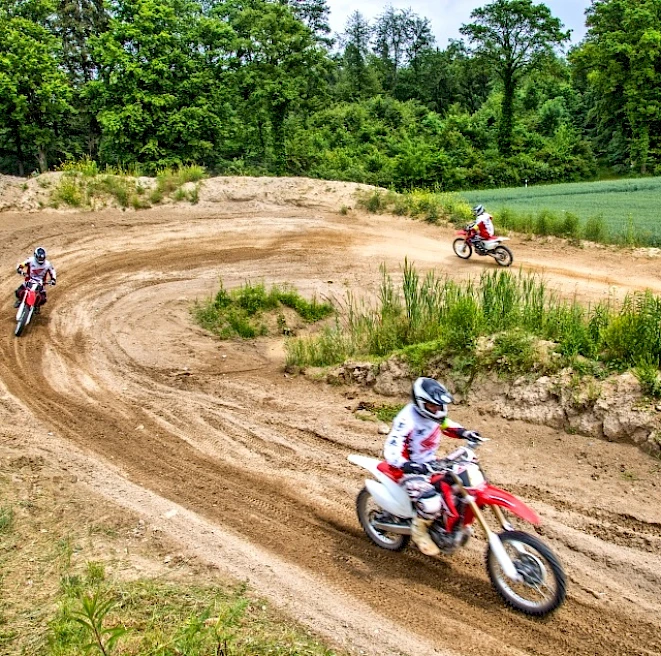
Custom bike riders – learning to ride a motorcycle with MX-Academy courses

Learning to ride a motorcycle for custom bike riders

Also for experienced custom motorcycle riders - fun, action and progress

Learning to ride a motorcycle to gain safety on the road - off-road courses are best suited for this, with the best protective gear, a suitable closed circuit, instructors and theory before riding. Do you want to master your custom motorcycle better? Then book a course at MX-Academy - fun and progress guaranteed

The motorcycle training facility in Schlatt is part of NASAK (the federal inventory of significant national sports facilities) of Swiss Olympic

Learn to ride – MX-Academy courses for custom bike riders – more info

Riding a motorcycle for custom bike riders

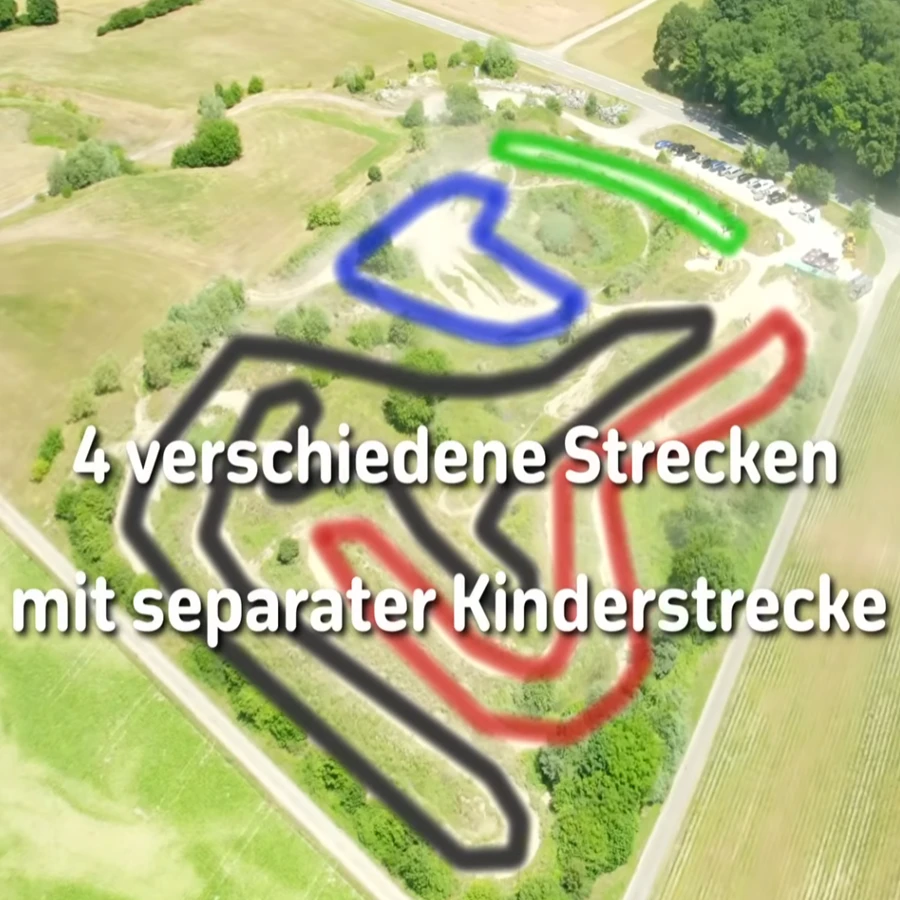
At MX-Academy, four different tracks with different groups are available for the motorcycle courses. Among them a beginners track with gravel, to make getting started riding on loose ground as easy as possible. Depending on your progress you can change group at any time.

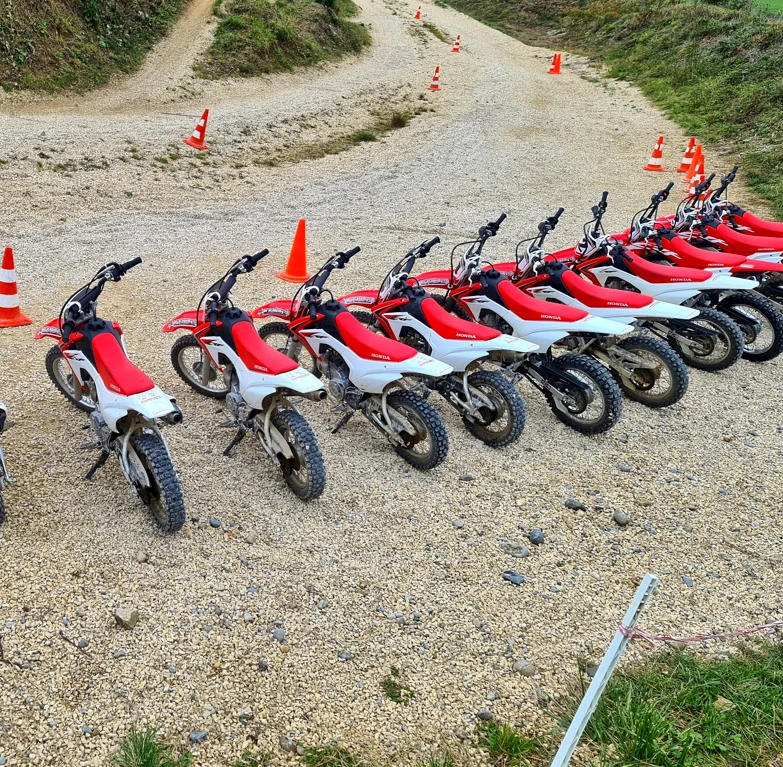
The same applies to the machines: motorcycles in all sizes are available, with 250 cc bikes ready for beginners as well as competition motorcycles. The aim of every course is that all participants for whom the motorcycle suits their body size are able to ride the competition motorcycle on the advanced track.

With the MX-Academy training system we see enormous progress from all participants within a single day

MX-Academy is the largest enduro and motocross school in Europe, has around 20 years of experience and unites many national and international off-road titles.

The training facility in Schlatt is part of NASAK (the federal inventory of significant national sports facilities) of Swiss Olympic

Ready for the adventure with fun and progress? You can register directly via the coloured link

Frequently asked questions about cafe racers, custom bikes, bobbers and choppers


What is a custom bike?

A custom bike is an individually designed or converted motorcycle with strong character, classic design and a relaxed riding feel. It stands out from production models through personality, style and construction. With the Honda Rebel 500, the Honda Rebel 1100, the Honda GB350 and the Honda CL500, Honda covers the main style directions.


Which Honda custom bikes are available in Switzerland?

Honda offers five models: Honda GB350, Honda CL500, Honda Rebel 500Honda CMX500 Rebel, Honda Rebel 1100 (CMX1100 Rebel) and the Honda Rebel 1100 Special Edition. All are available at Honda Motorrad Zürich AG in Volketswil. Overview: Cafe racer, bobber and custom bikes by Honda


What is the Honda Rebel 500?

The Honda Rebel 500 is the most searched custom bike from Honda and is registered as the Honda CMX500 Rebel in the vehicle documents. It has a 471 cc twin with 34 kW, is approved for category A restricted, weighs little and has a very low seat height. With its minimalist bobber design the Honda CMX500 is the classic way into the segment.


What does a Honda Rebel 500 cost?

The price of the Honda Rebel 500 depends on version, colour and accessories. Current prices and the Honda CMX500 Rebel machines in stock are shown in the vehicle list on this page. For advice call us on +41 44 908 20 00 or write to info@honda-zuerich.ch.


What is the difference between the Honda Rebel 500 and the Honda Rebel 1100?

The Honda Rebel 500 with 471 cc and 34 kW is approved for category A restricted and aimed at beginners and everyone looking for a light bobber motorcycle. The Honda Rebel 1100 uses the 1084 cc twin from the Africa Twin with 65 kW, is designed as a cruiser for long distances and is optionally available with DCT automatic transmission.


Is the Honda Rebel 500 approved for category A restricted?

Yes, the Honda Rebel 500 is available as the Honda CMX500 Rebel restricted to 35 kW and is therefore approved for category A restricted. After moving up to category A the motorcycle can be converted to full power.


What is a bobber motorcycle?

A bobber is a custom bike from which everything superfluous has been left out: short mudguards, a low centre of gravity, a reduced line. The bobber motorcycle from Honda is the Honda Rebel 500. The Honda Rebel 1100 follows the same design language, but with considerably more power.


What is a chopper motorcycle and does Honda offer one?

A chopper motorcycle has a long fork angle, a stretched silhouette and strong individualisation – the closest relative of the bobber. Honda does not offer a factory chopper motorcycle. Anyone who wants to take a custom bike towards chopper looks works through the handlebar, the seat and the chassis; the Honda Rebel 500 and Honda Rebel 1100 are the obvious starting points. We carry out conversions in our own workshop: Motorcycle workshop, conversion and service


What is a cafe racer?

The cafe racer emerged in London in the fifties and sixties and is the sportiest custom bike style: clip-on handlebars, a stretched riding position, a short rear end, a continuous line. Motorcycles with a visible steel tube frame and classic basic geometry make the best base – at Honda the Honda CL500 and the Honda GB350.


What is a coffee racer?

Coffee racer is the frequently used spelling for the cafe racer and means the same style. A coffee racer conversion aims at a closed, horizontal line, a forward-leaning riding position and reduced add-on parts. The best conversion base in its class is the Honda CL500.


Which Honda is suitable as a cafe racer conversion base?

The Honda CL500. It has a visible diamond-type steel tube frame, a round headlight, a rounded tank and a twin-sided swingarm with stereo shocks – exactly the elements a cafe racer consists of. Honda itself declared the CL500 a conversion base: at the custom competition at the Wheels and Waves festival in Biarritz in 2024 a cafe racer concept won. The Honda GB350 is also suitable thanks to its slim silhouette.


Is the Honda CL500 a scrambler?

Yes. The Honda CL500 is a scrambler motorcycle – recognisable by its high-mounted exhaust, upright seating position and rugged appearance. The 471 cc parallel twin delivers 34 kW. It is suitable for city traffic, touring and light terrain and is approved for category A restricted.


What does the Honda CL500 cost?

Price and availability of the Honda CL500 depend on model year and equipment. The currently available machines are shown in the list on this page. Arrange a test ride here: Motorcycle test ride and rental


What is the Honda GB350?

The Honda GB350 is a retro custom bike with timeless design and classic motorcycle engineering: 348 cc single cylinder, air-cooled, around 15 kW, low seat height, good-natured handling. As the GB350S it appeals to lovers of classic motorcycles and is a popular base for a cafe racer conversion.


Which custom bike is suitable for beginners?

The Honda Rebel 500. As the Honda CMX500 Rebel it is approved for category A restricted, has a low seat height, low weight and good-natured power delivery. The Honda GB350 and the Honda CL500 are also accessible. To deepen your riding technique: Motorcycle courses Switzerland


Which custom bike is suitable for women?

The Honda Rebel 500 with its low seat height and light handling is particularly accessible for female riders, as is the Honda GB350. Both offer style without compromising on rideability. More: Motorcycle for women


What is the difference between a bobber and a scrambler?

A bobber is minimalist and built low, with short mudguards and a low centre of gravity – like the Honda Rebel 500. A scrambler motorcycle has a high-mounted exhaust, more suspension travel and is more versatile – like the Honda CL500. Both are among the most popular custom bike styles.


What is the difference between a custom bike and a cruiser?

Custom bike is the umbrella term for individually designed or converted motorcycles. A cruiser is a body style with a relaxed seating position, a low centre of gravity and a long wheelbase. Many custom bikes are based on cruiser platforms – such as the Honda Rebel 1100, which is designed as a cruiser.


Which is the most powerful custom bike from Honda?

The Honda Rebel 1100 with 1084 cc and 65 kW. The twin comes from the Africa Twin. Riding modes, traction control and the optional DCT dual clutch transmission make the CMX1100 Rebel the most modern model in the range. The Special Edition adds exclusive design and equipment details.


What is DCT on the Honda Rebel 1100?

DCT stands for Dual Clutch Transmission, an automatic dual clutch gearbox. Honda offers it as an option for the Honda Rebel 1100. It allows riding without manual clutch work – ideal for relaxed touring and city traffic.


Which custom bike is the lightest?

The Honda GB350 with its compact 348 cc single cylinder and slim construction. It is particularly interesting for smaller riders and beginners. The Honda Rebel 500 is also among the most accessible models thanks to its low seat height.


Can I have my custom bike converted?

Yes. We carry out conversions and customising in our own workshop in Volketswil – handlebar, seat, exhaust system, lighting, footpegs, chassis and paintwork. What is possible and what it costs: Motorcycle workshop, conversion and service


What has to be registered for a motorcycle conversion in Switzerland?

Substantial changes to the frame, chassis, brakes, exhaust, lighting or tyres must be presented to the road traffic office and entered in the vehicle registration document. Add-on parts require test marks, type approvals or expert reports. Whether a conversion can be registered is clarified before the build – not afterwards.


Does the warranty remain valid after a conversion?

Yes, provided the work is carried out professionally by an official Honda business using original accessories and tested components. Conversions should also be reported to the insurer and taken into account in the comprehensive cover.


When is the best time for a conversion?

The winter season. Anyone who brings in their motorcycle in autumn collects it in spring fully registered and does not lose a single riding day. In the high season workshop capacity is tighter and turnaround times are longer.


Can I test ride a custom bike?

Yes, we have Honda custom bikes available as demonstration machines. A test ride is possible against a small contribution towards costs, which is credited when you buy. Arrange an appointment on +41 44 908 20 00 or here: Motorcycle test ride and rental


Are Honda custom bikes also available used?

Yes, alongside new machines we offer used models and demonstration motorcycles. A used machine is often considerably cheaper and a popular basis for a conversion project.


Can I lease or finance a custom bike?

Yes, all models can be financed or leased through Honda Bank. Flexible terms make your desired motorcycle possible without tying up a large amount of capital: Motorcycle financing and leasing


Can I trade in my current motorcycle?

Yes, we buy and trade in motorcycles of all brands. The trade-in value is credited when you buy: Motorcycle trade-in and purchase


What protective gear do I need?

Custom bikes offer little fairing protection. We recommend a helmet to ECE 22.06, a jacket with protectors, motorcycle trousers with protectors, gloves and boots. Everything about it: Motorcycle clothing Zurich


Where do I buy a custom bike in Zurich?

At Honda Motorrad Zürich AG, Chlirietstrasse 12, 8604 Volketswil – the first Honda Dream Dealer in Switzerland. All models in the showroom, test rides possible, advice included. Tel. +41 44 908 20 00, info@honda-zuerich.ch. Overview: Cafe racer, custom bikes and bobber


Which Honda motorcycle works as a cruiser?

At Honda the Rebel range is the cruiser: the CMX500 Rebel for the restricted A licence and the CMX1100 Rebel with more capacity. Both bring the low seat, the long wheelbase and the relaxed bar position that define a cruiser – and both are a rewarding base for a custom cruiser with special equipment. The machines currently available are listed on this page. For advice call 044 908 20 00.

What is a retro motorcycle, and which Hondas are retro bikes?

A retro motorcycle picks up the shapes of classic machines: a round headlight, a visible frame, a classic tank and very little bodywork. At Honda that is mainly the GB350, with a single-cylinder engine and an upright riding position, and the CL500, which takes the retro look in a scrambler direction. Both also work as a conversion base for a cafe racer. Available retro bikes are listed on this page.